


Ancient Wisdom • Modern Understanding • Holistic Wellness
Cupping therapy is a traditional healing practice used to support circulation, relieve muscle tension, and promote overall well-being. In Traditional Chinese Medicine, cupping is also associated with releasing stagnation and restoring the healthy movement of Qi and Blood.
Modern research is exploring how cupping influences local circulation, inflammation, pain perception, and other physiological processes.
How Cupping Works — Step by Step
1. Application of Suction
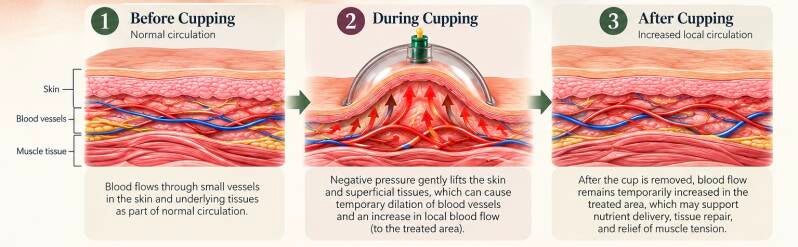
A specialized cup is placed on the skin. Negative pressure is created using heat or a suction pump, gently lifting the skin and underlying superficial tissues.
2. Increased Local Circulation
The suction produces changes in superficial blood vessels and may temporarily increase local blood flow.
3. Release of Stagnation
In Traditional Chinese Medicine, cupping is believed to help release stagnant Qi and Blood.
From a biomedical perspective, researchers are investigating how mechanical stimulation affects tissue circulation, local fluid movement, and inflammatory responses.
4. Activation of Natural Cleansing Pathways
One proposed mechanism suggests that cupping may influence local interstitial fluid movement and lymphatic activity.
However, whether cupping meaningfully enhances the body’s systemic detoxification processes has not been established.
5. Healing Response
Following treatment, some individuals experience reduced muscle tension, improved comfort, and relaxation.
Temporary circular marks may develop as a result of suction-related changes in superficial blood vessels.
What Cupping May Help Remove or Influence
Traditional cupping theories describe the treatment as supporting the release of stagnation and accumulated waste.
Research has explored several related physiological factors:
Metabolic Waste Products
Substances such as lactate, urea, and creatinine are normal products of metabolism. Whether dry cupping increases their elimination remains uncertain.
Inflammatory Mediators
Cupping may influence local inflammatory signaling. Researchers continue to investigate changes in cytokines and other inflammatory markers.
Excess Interstitial Fluid
Suction mechanically affects superficial tissues and may temporarily alter local fluid distribution. Sustained improvements in lymphatic drainage have not been established.
Stagnant Blood
In Traditional Chinese Medicine, Blood stagnation describes a functional pattern associated with impaired flow and discomfort. It is not equivalent to a confirmed accumulation of stagnant blood within the tissues.
Environmental Toxins
Cupping has traditionally been associated with detoxification, but clinical evidence has not established that dry cupping removes environmental toxins.
Muscle Tension and Fascial Restrictions
Mechanical stimulation from cupping may influence perceived muscle tightness and tissue mobility.
Proposed Detoxification Pathways Supported by Cupping
Skin
Cupping mechanically stimulates the skin and superficial tissues, producing temporary redness and changes in local circulation.
Blood Circulation
Suction can temporarily increase superficial blood flow. Its longer-term effects on tissue oxygenation and healing require further investigation.
Muscular System
Cupping may help reduce perceived muscle tension and certain types of musculoskeletal pain.
Lymphatic System
Researchers have proposed that cupping may influence interstitial fluid movement and lymphatic circulation. Clinical evidence remains limited.
Fascial System
The lifting action of suction stretches superficial connective tissues and may influence perceived stiffness and mobility.
Nervous System
Cupping stimulates sensory receptors in the skin and superficial tissues. Pain modulation is one proposed explanation for the relief reported by some patients.
Key Effects of Cupping Therapy
Detoxification Support: Traditionally associated with cleansing and releasing stagnation; systemic toxin removal has not been demonstrated.
Pain Relief: May provide short-term relief for some musculoskeletal pain conditions.
Reduced Inflammation: Changes in inflammatory biomarkers are being investigated, but consistent clinical benefits have not been established.
Improved Circulation: Can temporarily increase superficial blood flow in treated areas.
Faster Recovery: Sometimes used to support physical recovery, although evidence for accelerated tissue healing is insufficient.
Stress Relief: Some individuals report relaxation and reduced perceived tension after treatment.
Overall Wellness: May complement an individualized wellness plan when appropriately indicated.
Dry Cupping and Wet Cupping: Understanding the Difference
Dry Cupping
Dry cupping uses suction without making skin incisions or withdrawing blood.
It is commonly used for muscle tension, discomfort, and relaxation.
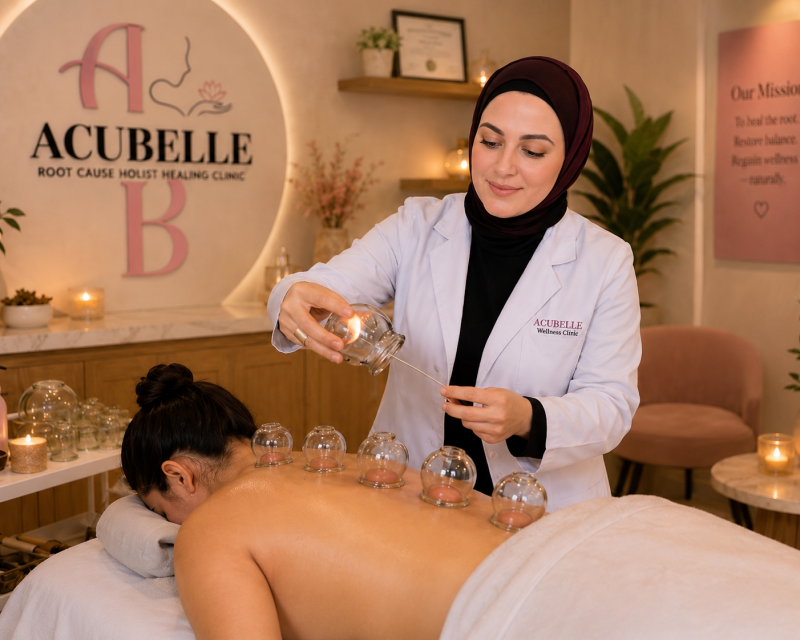
Fire cupping is a traditional method of dry cupping in which heat is used to create suction inside the cup before application.
Wet Cupping (Hijama)
Wet cupping combines suction with small superficial skin incisions to withdraw a limited amount of blood and tissue fluid.
Traditionally, Hijama has been associated with cleansing and restoring balance.
Research continues to investigate the composition of collected blood and its potential clinical significance.

Important Scientific Note
Cupping therapy combines centuries of traditional practice with emerging scientific investigation.
Research suggests possible benefits for certain pain conditions and local circulatory responses. However, many proposed detoxification, lymphatic, inflammatory, and immune-related mechanisms require further high-quality clinical studies.
Cupping should be considered a complementary therapy rather than a replacement for necessary medical treatment.
Experience Cupping Therapy at Acubelle Wellness Clinic
At Acubelle Wellness Clinic, we combine Traditional Chinese Medicine principles with personalized assessment and evidence-informed care.
Our goal is to understand your individual needs and provide a professional, safe, and supportive treatment experience.
Add comment
Comments